One wall-mounted touchscreen for the whole room: four independent 0–100% dimming channels, up to nine timer segments a day, a 10–180 minute sunrise/sunset ramp, and two-stage thermal protection that steps fixtures down before heat turns into crop damage. PWM and 0–10V output in the same unit, with Bluetooth app control for groups and multi-room networks.
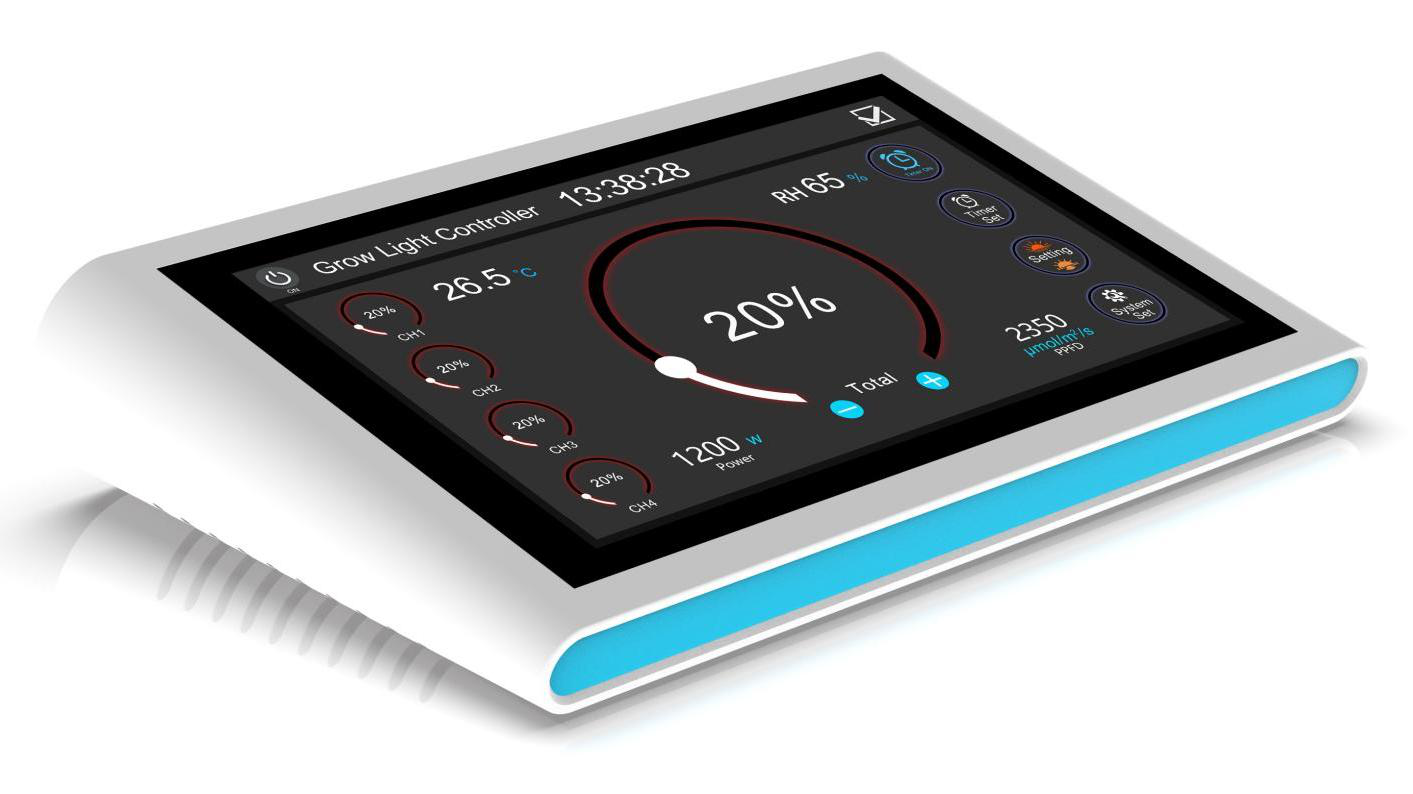
Channel 1 drives your top lights, channel 2 the under-canopy rows, channels 3 and 4 the next rooms or supplemental bars. Each channel dims 0–100% on its own under a master level, so one fixture family per channel keeps spectrum and intensity exactly where each zone needs them.
Every function runs on the controller itself. Nothing here depends on a phone being in the room.
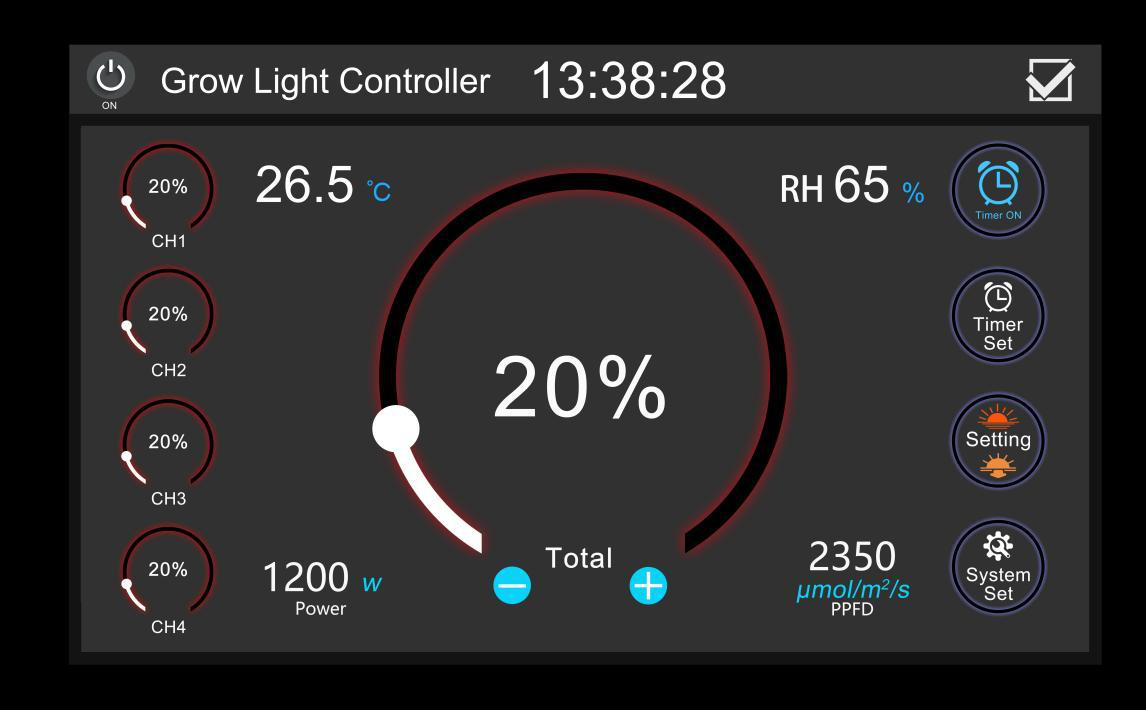
CH1–CH4 each dim 0–100% independently under a master level. Rename every channel after the zone it drives, so the screen reads like your floor plan.
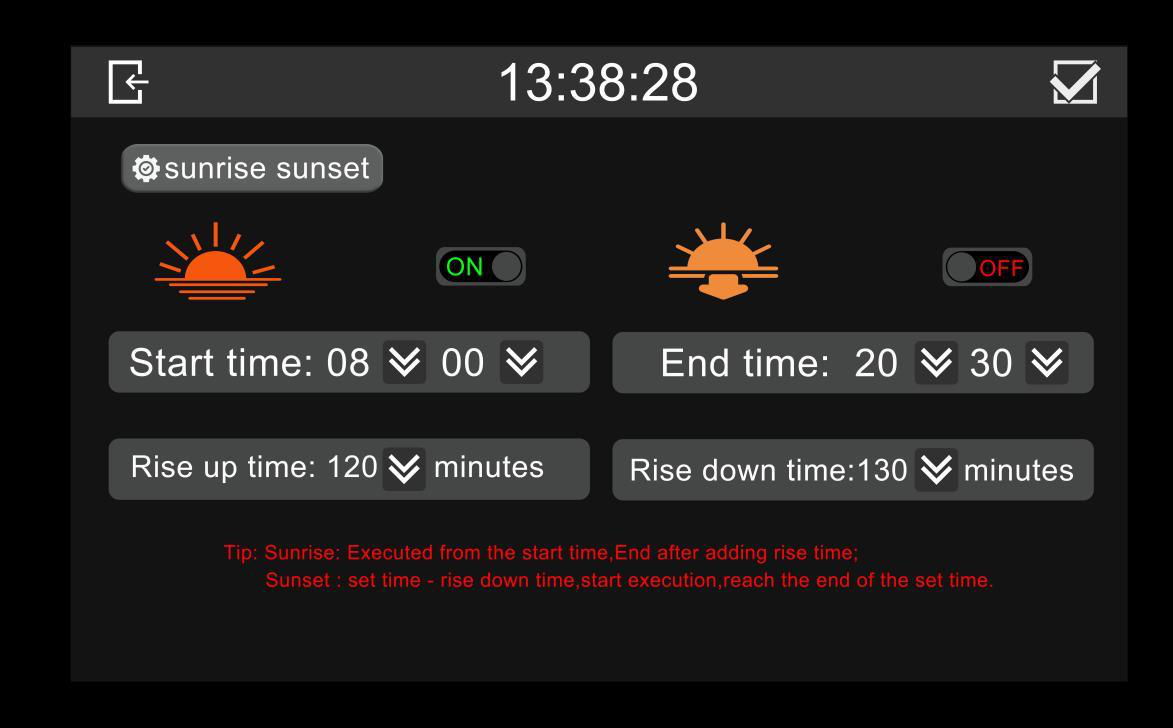
Stack up to nine brightness steps per day, each with its own level. A segment set to 0% is a clean lights-off. Timer programs take priority whenever they overlap a sunrise/sunset ramp.
Fade up or down over 10 to 180 minutes instead of snapping on, easing plant stress and power peaks at both ends of the photoperiod.
Past your derating threshold, output steps down 1% every 5 minutes; past the shutdown threshold, channels close. Both recover automatically once the room cools 5°C below setpoint.
The screen shows the SPD curve of the current channel mix, loaded from bench test data of the actual LEDs. You read the spectrum you are running, not a generic diagram.
Real-time temperature and humidity sit on the home screen, switchable between °C and °F. An external HT68-SHT probe is optional when the spot you need to monitor sits away from the controller.
Two screens your team touches most: the dimming home and the sunrise/sunset planner.
The touchscreen runs a room on its own. The Bluetooth app is what makes a whole facility manageable:
Standard connectors, standard signals, no proprietary gateway in the middle.
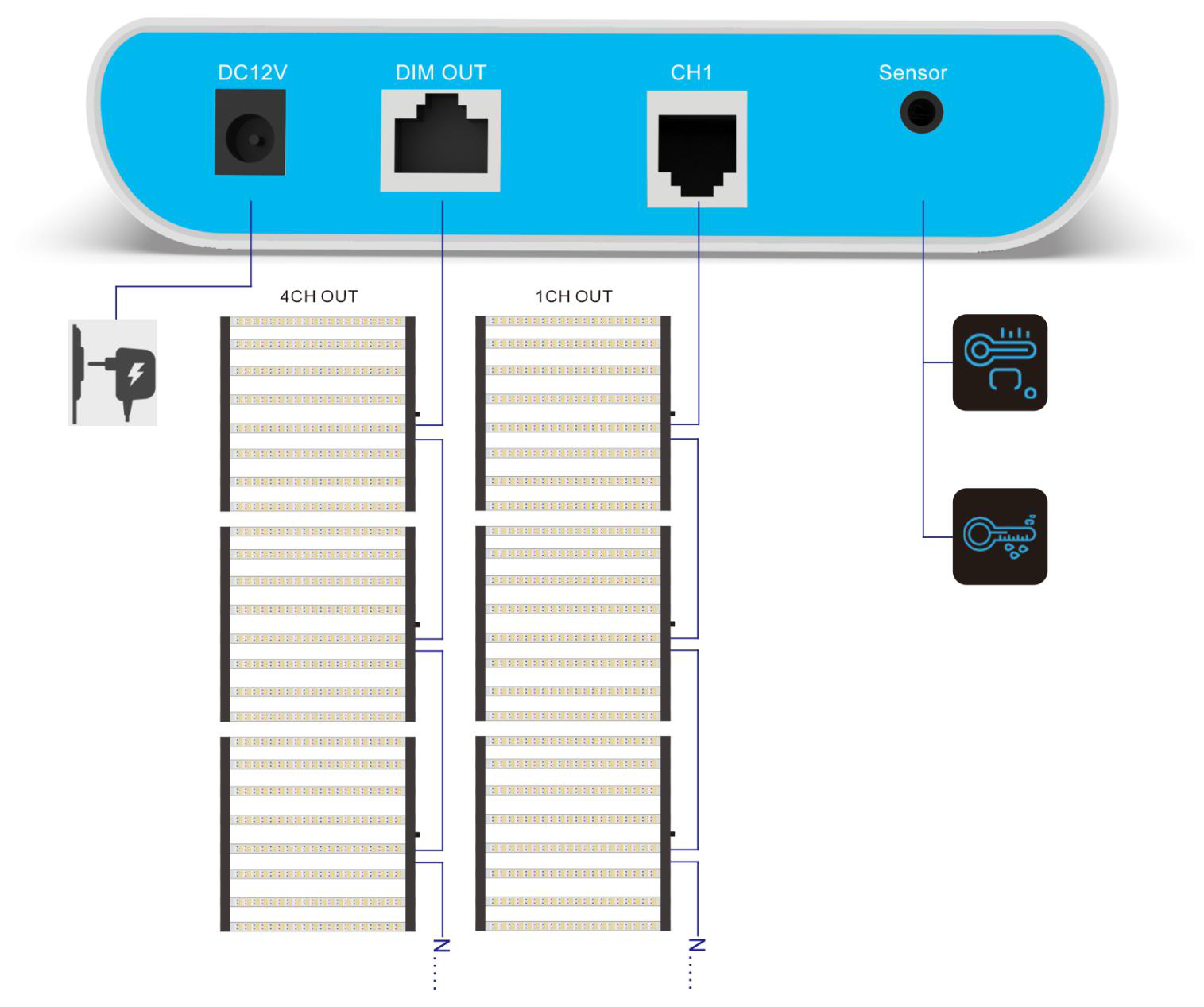
| Input | DC 12V ±5%, 0.5–1 A (power adapter included) |
| Standby power | <0.1 W |
| PWM output | 10V ±5% amplitude, 0–100% duty cycle |
| Analog output | 0–10V |
| Channels | 4 × independent 0–100% + master level |
| Ports | RJ45 8P8C ×1 (CH1–CH4) · RJ14 6P6C ×1 (CH1) · sensor jack PJ393 ×1 · DC in 5.5×2.1 |
| Display ranges | Power 0–1500 W · PPF 0–4800 µmol/s |
| MTBF | 20,000 hours |
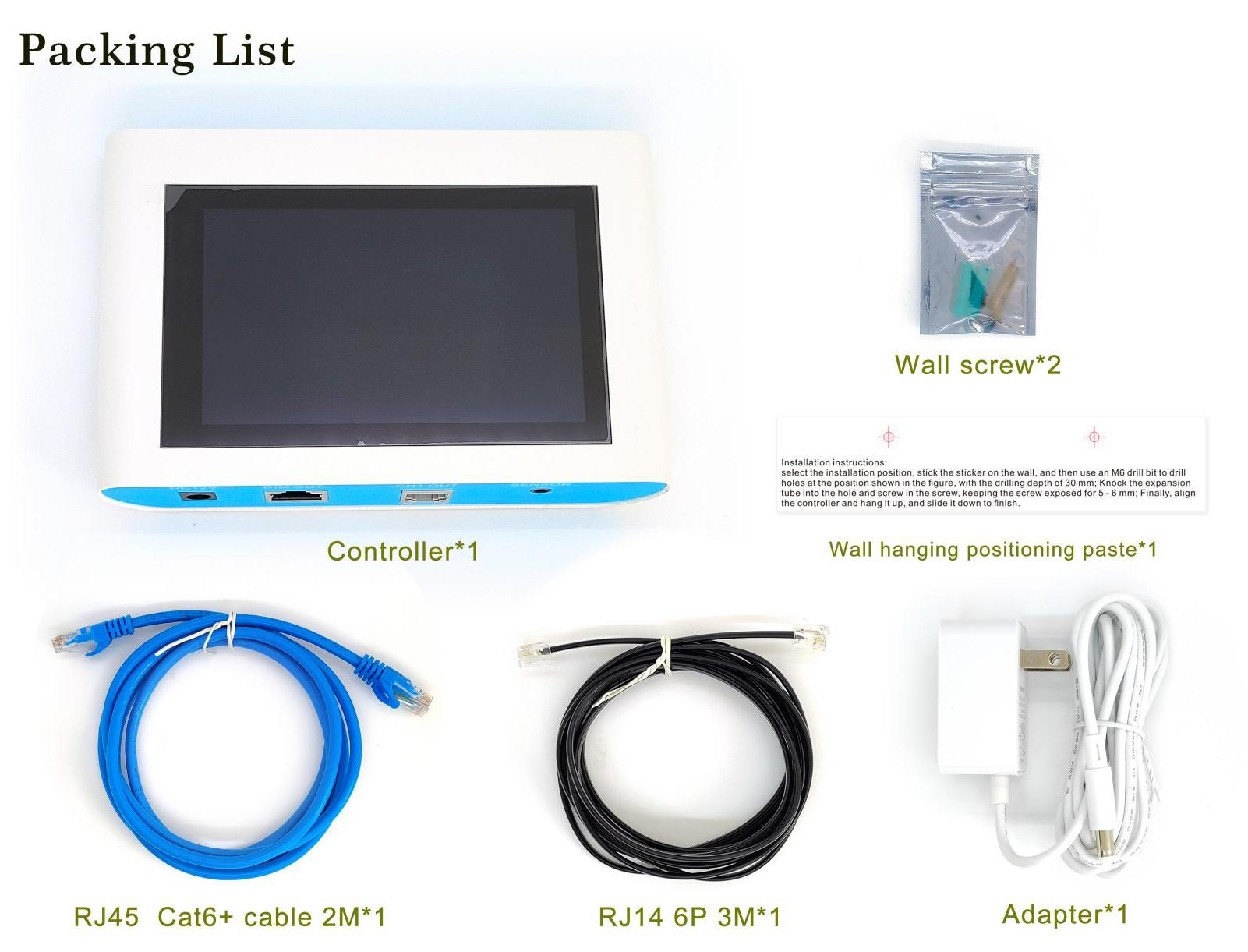
The controller drives four independent dimming channels through its RJ45 port (CH1 to CH4), and fixtures daisy-chain along each channel. Practical capacity therefore depends on how many dimming inputs the drivers in your chain can stack, not on the controller alone. Send us your room layout and fixture count and we will plan the channel split with you before you order.
Both are built into the same unit. You switch the output between PWM (10V amplitude, 0-100% duty cycle) and analog 0-10V in the system settings, so one controller covers both driver types. Match the setting to what your driver spec sheet calls for, or send us the driver model and we will confirm it.
Yes. The wall-mounted touchscreen runs a room completely on its own: dimming, timers, sunrise/sunset and protection settings all work offline. The Bluetooth app adds facility-level control: add lights and gateways over Bluetooth, organize fixtures into groups by room or rack, create one network per site, and share a network by QR code with access control and a validity period so each farm manager or technician gets the right level of permission.
Protection runs in two stages. Past the derating threshold you set, all open channels step down 1% every 5 minutes until the temperature falls 5 degrees below the setpoint, then ramp back automatically. Past the shutdown threshold, the channels close until the temperature recovers. A temperature and humidity sensor is built into the controller; an external HT68-SHT probe is available when the position you need to monitor sits away from the controller.
Sizing for a whole facility or comparing control options across fixture series? The top-light series, under-canopy series and solutions hub cover the fixture side; send us your room list and we will plan the channel split.
Send the room count, fixture list and preferred zones. We will map channels, groups and sensor placement into your lighting plan.
