
Most of the advice published under the phrase "starting a cannabis farm" is written for a closet, a tent or a backyard. It explains germination, light schedules for three plants and how to dry a first harvest in a spare room. All of it is true and almost none of it transfers, because a commercial farm is not a bigger version of a home grow. It is a licensed manufacturing facility with a cultivation process inside it, and the skills that make a good home grower are roughly a third of the skills that keep a commercial room running for five years.
The other failure in the public advice is that it stops at the plant. A farm is a plant, a building, an electrical service, a payroll, a compliance file and a buyer, and the decisions that decide whether it survives are mostly made before the first seed is ordered. Industry veterans put it bluntly: the majority of cultivation problems trace back to planning oversights committed long before anything was planted. This page is about those decisions, in the order they should be made, written from the equipment side of the table.
It is also written with a boundary, the same one a supplier should state openly. Nothing here is legal, financial or tax advice, and licensing regimes differ by country, state and municipality. The licensing section below explains where the license sits in the sequence, not how to get yours. For that, a cannabis attorney in your jurisdiction is the only correct source.
The Short Answer: A Fixed Order of Decisions
A farm that opens on time and on budget is almost always a farm that worked a sequence, because each decision in the sequence limits the cost of the next one. The sequence is not complicated. What varies is the discipline to refuse to skip ahead when a step is uncomfortable.
One. Confirm the legal right to cultivate, with a license or permit from the authority that governs commercial production in your jurisdiction, before signing anything with a duration longer than a year. Two. Raise the capital the whole plan needs, not the first phase. Three. Choose the facility type: indoor, greenhouse or a mix, new build or retrofit. Four. Draw the room map: mother, propagation, vegetative, flower and dry rooms, sized against each other. Five. Hire the head grower and let them write the standard operating procedures before the equipment list is final. Six. Pick the cultivation method the team can actually staff. Seven. Buy equipment in dependency order, with lighting as the largest and most consequential line. Eight. Commission everything empty, then run a full cycle before the second room is committed.
Notice where the lights are: step seven, not step one. Buyers sometimes approach us with fixtures already chosen and rooms not yet drawn, and the honest answer is that the fixture conversation is short at that point because the room decides most of it. Ceiling height, room dimensions, electrical service, the dark period requirement and the head grower's canopy strategy together rule out most of the market before a price is discussed. That is the argument of this whole page: do the earlier steps and the lighting decision becomes a short calculation rather than a gamble.
The License Comes Before the Lease
The first decision is administrative and it decides everything downstream: without written permission to cultivate from the entity that authorises and monitors commercial production in your jurisdiction, a start-up cannot legally acquire genetics, propagate plants or sell a harvest. Land can be bought, greenhouses can be erected and staff can be hired, but none of that produces a crop until the license exists. Since buildings, leases and equipment are usually bought with borrowed money that runs on a clock, the license has to lead the calendar rather than follow it.
Three practical consequences follow, and they are sequencing rules rather than legal ones. First, the license application typically describes the facility, the security plan and the standard operating procedures, which means you need architects' drawings and a compliance outline before you apply, but you do not need to pour concrete before you apply. Second, licenses take time measured in quarters, not weeks, and that waiting time is not dead time: it is exactly when the room map, the head grower search and the equipment specification should be happening. Third, the license usually attaches to a location and a layout, so a site change after approval restarts part of the clock, which is the strongest argument for choosing the facility before applying rather than after.
Where farms get this wrong is not ignorance, it is optimism about timing. A team that signs a lease expecting a license in three months and receives it in nine has paid for an empty building through two cycles of carrying cost. The defence is a plan for the waiting period and a lease with terms that acknowledge the regulatory timeline, both of which are conversations for an attorney and a commercial real estate broker who have done cannabis deals before.
Size the Capital Before the Square Meters
The second decision is how much money the whole plan needs, raised before the build starts, because an under-capitalised farm does not fail slowly, it fails at a specific moment: the first unplanned expense after the contingency is spent. Industry guidance for North American start-ups gives a useful order of magnitude, and it is worth repeating with its caveats. Surviving the licensing phase alone is commonly estimated in the low hundreds of thousands of dollars, while a sophisticated indoor or greenhouse production facility can run to eight figures by the time it is commissioned. Outdoor acreage needs a fraction of either.
Those ranges are wide because capital scales with three choices that are yours to make: the facility type, the degree of automation, and whether you build new or retrofit. A new indoor facility of 5,000 square meters is a different order of project from a leased warehouse with two rooms, and both are legitimate farms. What is not legitimate is budgeting for the first and building the second.
The structure of the budget matters more than its headline number, and the structure is stable across facility types. In round proportions that have been consistent across our customers' projects: the building and its fit-out are the largest block; the cultivation equipment, with lighting as its largest single line, is the second; climate, water and electrical infrastructure are the third; and licensing, professional fees and the operating runway to first revenue, often six months or more of payroll with no harvest, form the fourth. Teams that budget the first three and treat the fourth as something to solve later are the teams that sell equipment at a loss eighteen months in.
Two lines deserve specific attention at this stage, before any equipment is chosen. The first is the operating runway. A well-run build has saleable flower within roughly eighteen months of the license for a from-scratch project, and faster for a retrofit, but the number has variance and the payroll does not. The second is the contingency, conventionally ten to twenty percent, which in cultivation builds is not a cushion but a schedule, because something in a building full of water, power and living plants always needs redoing.
For the lighting line specifically, the cost conversation deserves its own arithmetic, because a fixture count times a price is only the visible part of a ledger that includes electrical capacity, cooling and replacement cycles. Our commercial grow light cost ledger walks that arithmetic room by room.
Indoor, Greenhouse or Mixed: Choosing the Facility Type
The third decision is the biggest fork in the road, and it is usually decided by capital, climate and the local market rather than by agronomy. Indoor, greenhouse and mixed facilities all grow the same plant well when run by a competent team, and all of them fail when the facility type does not match the money and the management available.
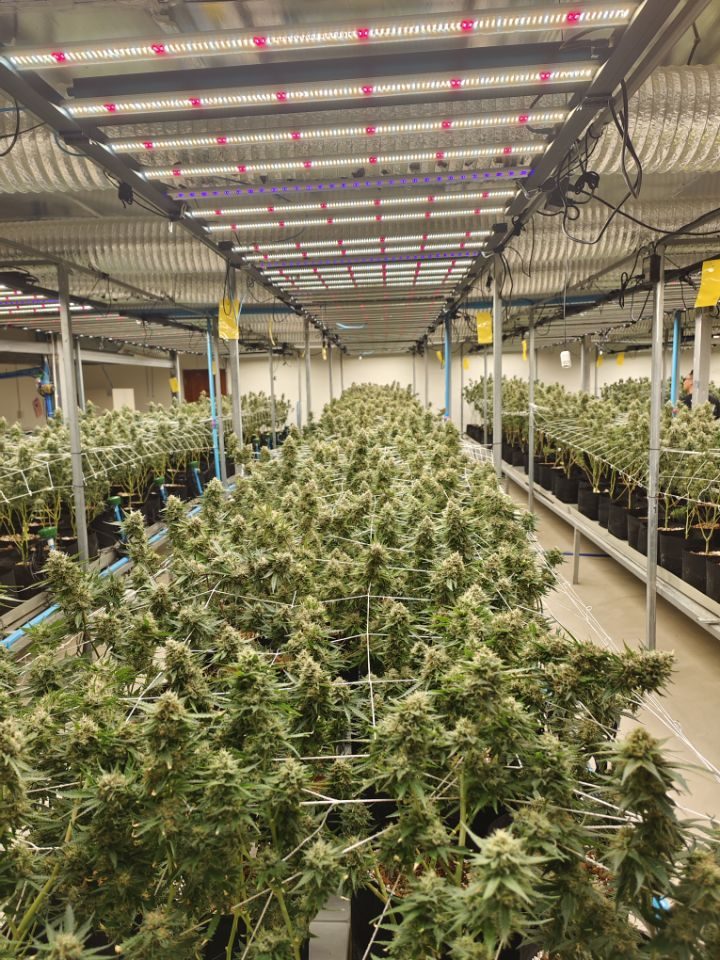
An indoor facility is a sealed box with manufactured light and manufactured climate. It gives the grower full control of every input, year-round production independent of season, the tightest biosecurity and the most consistent harvest quality, and it is the only choice where the product specification, not the weather, decides the photoperiod. What it costs is the highest build price per square meter, a continuous electricity bill that scales with light and cooling, and no free sunlight ever. Indoor also concentrates risk: a power event or a climate failure is a facility event rather than a bad week.
A greenhouse trades control for daylight. The sun supplies a share of the light and the heat, which lowers both the capital and the operating cost per unit of canopy, and modern greenhouse cannabis is grown with supplemental lighting and blackout systems that make photoperiod control real. What greenhouse costs is a building that is cheaper per square meter but needs more of them for the same flower area, a light deprivation system that must work mechanically every single day, and a production calendar that still bends to the seasons at the margins. In hot climates the cooling and humidity management of a greenhouse is a serious engineering project in its own right, not a footnote.
One input belongs in this decision that first-time developers routinely miss: the local electricity tariff, its demand structure and its voltage. In markets where demand charges price the peak fifteen minutes, a facility whose lighting load has a flat, staggered profile costs meaningfully less to run than one whose profile is spiky, and that difference is a design input, not a billing detail. Our guide to demand charges and lighting load covers the mechanism, and it belongs in the facility decision because it can outweigh several cents per kilowatt-hour of energy price.
For farms weighing the greenhouse path, the lighting and scheduling questions specific to glass are covered in our greenhouse lighting guide and our layout and schedule companion, and retrofit case work is on our greenhouse retrofit page.
| Facility type | What you control completely | What it costs you | Where the risk sits |
|---|---|---|---|
| Sealed indoor | every input: light, climate, photoperiod, biosecurity, year-round cycles | the highest build and energy cost per unit of canopy, with no free sunlight | a power or climate failure is a facility event, and the utility bill is the business's second payroll |
| Greenhouse | the crop schedule through blackout and supplemental light, with daylight doing part of the work | a cheaper building per square meter but more of them, plus daily mechanical blackout | seasonal edges, hot-climate cooling and humidity engineering, and a light deprivation system that must work every day |
| Mixed or phased | spending the expensive control only where the crop pays for it, often glass veg and indoor flower | two environments to build, staff and write procedures for | complexity: two failure profiles and two sets of SOPs under one roof |
| Retrofit of an existing building | the fastest route to first harvest when the envelope and service already exist | due diligence on service, structure, drainage and the lease instead of design freedom | a starved panel or a weak roof caps the farm's own yields, discovered after the lease is signed |
The Room Map: Mother, Propagation, Vegetative, Flower and Dry
The fourth decision is the internal layout, and it is where most first farms are quietly mis-sized. A cannabis facility is not one room at five stages, it is at least five rooms at one stage each, and they must be sized against each other or the whole facility bottlenecks in one of them. A flower room sized for a weekly harvest needs a propagation pipeline that produces a week's worth of plants every week, forever, and a dry room that holds a week's harvest at the right temperature and humidity for ten days or more without becoming the room the quality is lost in.
The mother and propagation block is small, quiet and continuous. Mother plants are kept in a vegetative state under moderate light, cuttings are taken on a schedule, and rooted clones spend one to two weeks under propagation lighting before they move. This block is often treated as an afterthought and it is exactly the opposite: genetics supply is the upstream of everything, and a failure here empties the flower rooms two months later. The lighting in this block is deliberately modest in wattage but unforgiving in uniformity, which is covered in detail in our mother and propagation room guide.
The vegetative room bulks the plants between propagation and flower, typically two to four weeks under long days, and it is the shock absorber of the facility: its sizing determines whether the flower rooms can be filled on schedule when a batch runs slow or fast. Vegetative rooms are also the natural home of a first phase, because a facility that starts with mothers, propagation and a single vegetative room can be generating revenue logic and trained staff while the flower build completes.
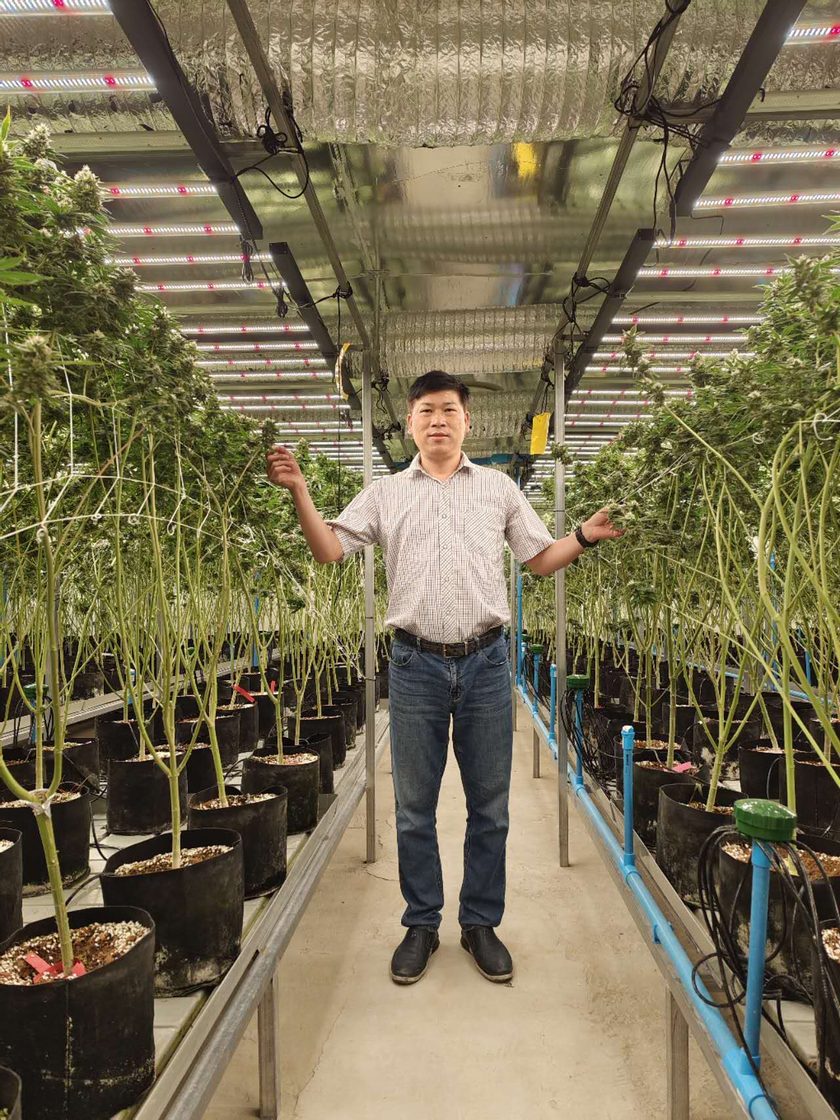
The flower rooms are the core of the business. They run a strict twelve-hour dark period, which drives the entire electrical and controls design: blackout reliability, dark-period integrity and the discipline of every door, sensor and fixture in the room. Flower is also where lighting wattage concentrates, where canopy uniformity converts directly into gram per square foot, and where a light leak or a controller fault is measured in lost cycles rather than lost days. The build logic for a commercial flower room, from bench height to fixture layout, is on our indoor flower room page.
The dry and cure block is the room the plant spends the longest time in after harvest, and it is the cheapest room to get right and the most expensive to get wrong. Drying is a slow, low-light, humidity-controlled environment, and its enemy is haste: a room pushed hot and fast turns weeks of cultivation into hay. It needs its own HVAC thinking, green-light discipline for any work during sensitive periods, which is covered in our guide to light leaks and green work lights, and a floor area sized to the harvest cadence rather than borrowed from a corridor.
Two sizing habits keep the map honest. Ratio the rooms to the harvest cadence, not to the floor plate you happen to have: for a weekly perpetual harvest, a common starting balance is roughly one part propagation to two parts vegetative to six parts flower by canopy area, tuned by strain and method. And draw the plant flow on the map before the electrical one: people and plants should move from clean areas to dirty ones in one direction, because the reverse layout is a pest and pathogen subscription.
| Room | What it does | The environment it runs | The lighting that belongs in it |
|---|---|---|---|
| Mother room | holds the genetics in a vegetative state and feeds the propagation schedule | moderate light, long days, stable temperature, low disturbance | modest wattage with unforgiving uniformity, so every mother cuts the same |
| Propagation | roots cuttings and hardens seedlings for one to two weeks | gentle light, high humidity, warm media | low-output uniform fixtures close to the canopy, dimmable as roots take |
| Vegetative | bulks plants for two to four weeks before flower, and buffers the schedule | long days, strong light, active transpiration | top lights at a spacing that matches the flower strategy, so plants arrive shaped right |
| Flower rooms | the core of the business, on a strict twelve-hour dark period | controlled temperature and humidity, measured dark integrity | the farm's main wattage: 600 W to 1,600 W top lights plus under-canopy bars on dense tables |
| Dry and cure | carries the harvest for ten days or more after it is cut | slow, cool, humidity-controlled, low light, no hurry | almost none, and green work light for anything done in sensitive periods |
Hire the Head Grower Before the Equipment List Is Final
The fifth decision is the first hire, and the industry consensus on it is unusually unanimous: an experienced commercial head grower, and specifically one with facility-scale production experience, not necessarily cannabis. Running a twenty-room perpetual facility is a production management job: scheduling, people, environmental control, data and the discipline to write procedures and hold a team to them. Many excellent hands-on cannabis growers do not have that experience, and many excellent commercial horticulture managers have it without ever having grown cannabis. The second profile, paired with a cultivation consultant for the crop-specific knowledge, is a well-trodden and successful route.
The reason this hire precedes the equipment list is simple: the head grower writes the standard operating procedures, and the procedures decide the equipment. A grower who works from bench tables will specify a different fixture layout, a different irrigation design and a different room ratio than one who works from rolling racks. A head grower who wants data will specify a sensor and controller architecture that costs real money and returns it in consistency. Buying the equipment before the person is choosing the procedures before the author.
Management structure is worth a paragraph because it is where funded start-ups most often damage themselves. Clear job responsibilities, written procedures with named owners, and a head grower who is allowed to run cultivation while the owners run the business. Micromanagement of the cultivation lead by a non-growing investor is a documented failure pattern, and it is avoidable at the cost of one uncomfortable conversation at hiring time about who decides what.
Choose the Cultivation Method You Can Staff
The sixth decision is the growing method, and the correct answer for a first farm is nearly always the most boring one that the team has actually run before. Soil and soilless container culture are forgiving, cheap to start and slow to fail. Hydroponic methods, recirculating or drain-to-waste, grow faster per square foot and fit automation beautifully, and they punish a staffing gap within hours rather than days: a pump failure in deep water culture with nobody in the building is a crop event by lunchtime. The advanced methods are not wrong, they are a second-year upgrade that a functioning team earns, not a first-year bet that an untrained one takes.
Method also feeds the room map and the equipment list directly, so it has to be fixed before procurement. Hydroponic benches change the water design, the floor design, the sanitation design and the fixture mounting strategy, because rolling benches and flood tables move the canopy geometry in ways a static soil layout does not. For farms going the hydroponic route, the equipment stack for a commercial installation, from reservoirs and dosing to benches and drainage, is covered in our hydroponic cultivation equipment guide, and the decision framework between soil and hydro is in our hydroponics versus soil comparison.
One more input belongs to this step: the strain list. The industry guidance for start-ups is to launch with a small number of varieties, commonly five to ten, and to add more only once production is rolling. Every additional strain is another nutrition recipe, another timeline, another mother to maintain and another way for a perpetual schedule to desynchronise. Varieties can be stored and introduced as the team matures, and the discipline is cheap at purchase time and expensive at harvest time.
Where the Lights Fit in the Sequence
By this point the room map exists, the method is fixed, the head grower is hired and the fixture conversation can be a calculation. That calculation has four inputs and one output. The inputs are the room dimensions and ceiling height, the canopy strategy, benches or racks, the light level the head grower targets at the canopy, and the electrical service available. The output is a fixture count, a layout, and a wall wattage that is simultaneously the electricity bill and the cooling load.
Commercial top lights in our class run from 600 W to 1,600 W, with the choice between them driven by ceiling height and mounting strategy rather than by ambition: a low ceiling under a fixed bench wants a different fixture than a tall bay over rolling racks. Below the canopy, 120 W to 300 W under-canopy bars fill the shade side of a dense table. The arithmetic that turns rooms and targets into a fixture count, including the PPFD targets by stage and the uniformity constraints, is the subject of our how many fixtures guide, and the spectrum and quality questions are covered in our full spectrum buying guide.
The choice between fixture classes is where the budget conversation and the agronomy conversation meet, and the honest version of it is in three numbers: delivered efficacy in micromoles per joule, how to read which is covered in our efficacy guide, the heat load per fixture, and the watts per unit of canopy. The LED versus HPS version of that comparison, including what a retrofit actually saves, is in our LED versus HPS analysis, and the first thirty days of running a room after a change of light source are walked through in our retrofit first month guide.
What we would put in front of a new farm, plainly, is the sequence itself. Bring the room map, the ceiling height and the target light level, and the fixture count is a short piece of arithmetic with a quotation behind it. Bring a fixture choice made in advance and the arithmetic has to be run backwards, which is slower, and sometimes the honest answer is that the room wants a different fixture than the one already promised to an investor. The conversation starts the same way every time, through our request a quote page, with the room dimensions and the canopy strategy.
The Electrical Question Is a Facility Question
The lighting decision lands on a building, and the building either has the service for it or it does not. For a new build this is a design conversation with the electrical engineer. For a retrofit it is a due diligence question that belongs in the lease negotiation, because upgrading a service is slow, expensive and sometimes impossible, and a warehouse with a beautiful floor plate and a starved panel is a cannabis farm that cannot reach its own yields.
Three numbers decide it: the service amperage, the voltage and phase configuration, and the spare capacity in the panel after the rest of the facility's loads are counted. Lighting is a continuous load by the nature of its photoperiod, which limits circuits to 80 percent of their rating, and a room full of fixtures presents an inrush event at switch-on that has to be managed by staging. All of this, plus the ground fault, IP and mounting questions that make a lighting installation safe in a wet, hot room, are covered in our grow room safety and energy guide, which we wrote precisely so that buyers could have this conversation with an electrician before signing a lease rather than after.
The second half of the same question is cooling. Every lighting watt that enters the room leaves it as heat, so the HVAC design starts from the fixture count and the schedule, not from the floor area. A head grower's temperature targets, which our temperature guide covers, are only reachable if the cooling plant was sized from the real lighting load. Both of these numbers are outputs of the lighting calculation, which is one more reason the lights sit late in the sequence: they convert the agronomy into the engineering, and everything downstream of them, panel, feeder, chiller, dehumidifier, is sized from what they say.
Yields and Timelines: The Numbers to Plan Around
Plans need numbers, and the honest ones for a new commercial farm are unglamorous. The industry rule of thumb for a competently run indoor flowering space is around 35 grams of dry flower per square foot per harvest, roughly 350 grams per square meter, measured on the flower canopy only, excluding aisles and service areas. Teams refine genetics, protocols and people from there, and a well-run operation should expect to be meaningfully above its first-year numbers by year three. Planning a business case on double the benchmark in year one is not optimism, it is a liquidity plan for a failure.
The timeline benchmark is equally plain. A from-scratch project, license to first saleable product, is commonly around eighteen months, and it compresses dramatically for a retrofit of an existing building with service in place, sometimes to a fraction of that. The drivers of the difference are the ones this page has already sequenced: construction and commissioning time, the licensing clock, and the biological clock, which is fixed, seed or clone to harvest is roughly four to six months of cultivation for most photoperiod varieties, covered stage by stage in our seed to harvest timeline.
Both numbers are planning inputs, not promises, and the discipline that matters is putting them in the capital plan together. Revenue per square foot times the first-year learning curve, on one side, and eighteen months of payroll, power and lease on the other, is the arithmetic that decides the raise, and it is better done sober and survived than done brilliantly and not.
The Procurement Sequence for a New Facility
Equipment buying has its own order, and it follows dependencies rather than enthusiasm. The building envelope and the electrical service come first, because everything else is installed inside them. Climate next, because HVAC and dehumidification are long-lead items and their sizing depends on the lighting plan, which means the lighting specification has to be settled before the chiller is ordered. Water and benching follow, driven by the cultivation method. Lighting is then bought against the layout, and controls, sensors and the lighting controller last, because they bind the rooms together. Anything that can be commissioned empty should be, and the full facility should run its first cycle with plants before the second phase is committed.
| Phase | What gets bought | What it locks in | The conversation to have first |
|---|---|---|---|
| 1. Envelope and service | building or lease, panel upgrade, main infrastructure | the ceiling on every later yield, and the calendar | an electrician reading the service, before the landlord does |
| 2. Climate | HVAC, dehumidification, airflow, controls backbone | whether the temperature and humidity targets are reachable at all | the lighting plan, because every lighting watt is a cooling watt |
| 3. Water and benching | irrigation, fertigation, benches or racks, drainage | the canopy geometry the fixtures hang over | the cultivation method, which decides all of it |
| 4. Lighting | top lights, under-canopy bars, drivers, mounting, circuits | the largest equipment line, the energy bill and the light levels for years | room dimensions, ceiling height and target PPFD with the supplier |
| 5. Controls and sensors | lighting controller, channels, sensors, logging | how the rooms run themselves and how failures announce themselves | the SOPs, because the controller enforces whatever the procedures actually say |
Supplier selection follows the same logic as hiring: written procedures, verifiable credentials and named accountability. For the lighting line, the questions that separate a commercial supplier from a catalogue with a logo are certifications with serialised listings, test reports for the specific model, driver and thermal data, warranty terms that survive the room's humidity, and an engineering conversation about your rooms rather than a price list. How to run that evaluation is the subject of our supplier selection guide, and our own documentation, certifications and test reports are on our certifications page.
One sequencing warning specific to lighting: do not buy fixtures to "get the order in" before the room map and electrical plan are stable. Lead times are real and capacity planning is legitimate, but fixture counts move with bench layout and ceiling decisions, and a lighting order placed against a room that changes afterwards is a discount sold at a loss. Reserve production capacity with a supplier, which is what our quotation process is for, and release it against frozen drawings.
How New Cannabis Farms Fail
The failure modes of first farms are well documented and nearly identical across markets, which makes them cheap to avoid. They are planning failures, not cultivation failures, which is the consistent finding from post-mortems: the majority of problems in a first build trace back to decisions made before anything was planted.
Under-capitalisation with an optimistic timeline. The raise covers the build but not the eighteen months of operation, or the plan assumes a license in one quarter instead of three, and the farm arrives at first harvest with no money left to dry it. The fix is the sober version of the numbers in the sections above.
The wrong facility for the money. A greenhouse budgeted and staffed like an indoor facility, or an indoor build started on a greenhouse's capital plan. The fix is the honest facility decision, including the tariff, before the lease.
Too many varieties, too advanced a method, too fast a schedule. A launch on a dozen strains in deep water culture with a first harvest promised in nine months is three separate bets stacked, and each one alone is survivable. The fix is the boring method, the small strain list and the realistic calendar.
Equipment bought out of sequence. Fixtures ordered before the room map, a chiller ordered before the lighting plan, a controller chosen before anyone wrote the procedures it will enforce. The fix is the dependency order in the procurement section, and a supplier who accepts an order against an unfrozen drawing is doing you no favours.
A management structure the farm outgrows in a year. Investors making cultivation decisions, a head grower without authority over the cultivation calendar, procedures that exist in a binder instead of in the team. The fix is uncomfortable and cheap: roles, authority and written procedures agreed at hiring.
None of these failures is a crop failure. Every one of them is decided at a desk, months before a seed is wet, which is the entire argument for taking the sequence seriously.
The First Six Months After the License
Once the license lands, the plan converts from paper to calendar, and the first six months have a shape that successful farms repeat. Commission the building empty: every system at full load with no plants, every alarm tripped deliberately, every dark period measured rather than assumed, every termination torque-checked while the electrician is still on site. This is the cheapest week of the whole project, and it is the one that most schedules are tempted to skip.
Then run the first cycle as a pilot, small and instrumented: one room, one strain block, one full crop through to dry, with the head grower writing the procedures that the data actually supports rather than the ones the plan assumed. The pilot pays for itself twice, once in the yield it protects and once in the procedures it produces, and those procedures become the training curriculum for the team that scales the facility.
Expansion follows the pilot, room by room, on the schedule the commissioning data supports rather than the one the investor deck promised. A farm that reaches steady state in the second year with its original team, its pilot-written procedures and its capital intact is the success case, and it is built from exactly the sequence this page has described: license, capital, facility, room map, people, method, then equipment, with the lighting decision arriving last among the big ones and converting the agronomy into the engineering.
When that conversation arrives, it starts with room dimensions, ceiling height and a target light level, and it is a short one when the earlier steps were done properly. That is the point of the order, and it is the point of this page.
Frequently Asked Questions
How much does it cost to start a commercial cannabis farm?
The honest range is wide because facility type drives it. Surviving the licensing phase is commonly estimated in the low hundreds of thousands of dollars, while a sophisticated indoor or greenhouse production facility can run to eight figures fully commissioned, with outdoor acreage a fraction of either. The structure of the budget is more stable than the number: building and fit-out, then cultivation equipment with lighting as its largest single line, then electrical, climate and water infrastructure, then the operating runway to first revenue. Budget all four blocks and a contingency, and treat any plan that funds only the first three as unfinished.
How long does it take from license to first saleable harvest?
For a from-scratch build, around eighteen months is the working benchmark, and a retrofit of an existing serviced building can be a fraction of that. The components are construction and commissioning time, the biological clock, which is four to six months of cultivation for most photoperiod varieties from rooted plant to harvest, and post-harvest drying time. The license waiting period itself, often measured in quarters, is best used for the room map, the head grower search and the equipment specification rather than treated as dead time.
Do I need a cannabis license before I start building?
You need it before you cultivate, and practically you need the application before you sign anything long. The license application usually describes the facility and its security and operating procedures, so drawings and a compliance outline come first, concrete comes after approval in principle, and genetics and propagation cannot legally happen until the license is issued. Because licenses attach to a location, choosing and securing the site before applying, with lease terms that acknowledge the regulatory timeline, is the standard sequence. Consult a cannabis attorney in your jurisdiction for the specifics.
Is indoor or greenhouse better for a new cannabis farm?
Indoor gives full control of light, climate and photoperiod, year-round production and the most consistent quality, at the highest build and energy cost per unit of canopy. Greenhouse lowers capital and operating cost by harvesting daylight, at the price of blackout systems, seasonal edges and a harder climate problem in hot regions. Mixed facilities, greenhouse vegetative with indoor flower, spend the expensive control only where the crop pays for it, at the price of running two environments. The right answer is decided by capital, climate and management depth, in that order, not by agronomy alone.
How many grow lights does a commercial cannabis room need?
It is a calculation, not a rule of thumb: room dimensions and ceiling height, the canopy strategy on benches or racks, the target light level at the canopy and the fixture's delivered output give a fixture count and a layout, and the wall wattage that follows is both the electricity bill and the cooling load. Top lights in our class run from 600 W to 1,600 W with the choice driven by ceiling height and mounting strategy, and under-canopy bars of 120 W to 300 W fill the shaded side of dense tables. The full arithmetic, including uniformity and stage targets, is in our guide to how many fixtures a room needs.
What yield should a new cannabis farm plan on?
Around 35 grams of dry flower per square foot of flowering canopy per harvest, roughly 350 grams per square meter, is the industry rule of thumb for a competent indoor operation in its first years, measured on flower space only. Well-run teams refine genetics, procedures and people and should expect to be meaningfully above their first-year numbers by year three. Planning the business case on double the benchmark in year one is the single most common way a farm finances its own failure.
Should a new commercial farm start with soil or hydroponics?
With the method the team has actually run at scale, and for most first farms that is a forgiving container culture, soil or soilless, rather than a recirculating hydroponic system. Hydroponics earns its faster growth and automation fit once the staffing, procedures and maintenance discipline are proven, and it punishes gaps within hours rather than days, because a pump failure with nobody in the building is a crop event by lunchtime. The decision framework between the two is in our hydroponics versus soil guide, and the equipment stack for the hydroponic route is covered separately.
How many cannabis strains should a start-up launch with?
Five to ten is the common industry guidance, and the logic is scheduling rather than biology: each strain is a nutrition recipe, a timeline, a mother plant and a way for a perpetual harvest to desynchronise. Launch with a small block, keep the genetics you are not yet running in storage, which seed does well for years refrigerated, and introduce varieties as the team and the procedures mature. Diversity is a year-two asset bought at a year-one cost if it is front-loaded.
Who is the most important first hire at a cannabis farm?
The head grower, with facility-scale production experience, which does not have to be cannabis experience. The role is production management: scheduling, people, environmental control, data and the discipline to write and hold procedures. Pair a commercial horticulture manager with a cannabis cultivation consultant and you have a well-trodden successful profile. The hire comes before the equipment list is final because the head grower's procedures decide the equipment, and the management structure agreed at hiring, who decides what, decides whether the farm outgrows its org chart in a year.
What is the biggest mistake new cannabis farms make?
Spending the planning phase on the plant instead of the project. The documented failure pattern is consistent: under-capitalisation against an optimistic timeline, a facility type that does not match the money, too many varieties on too advanced a method on too fast a schedule, equipment bought out of dependency order, and an unclear management structure. Every one of them is decided at a desk before a seed is wet, and every one of them is cheaper to avoid than any cultivation mistake of the same size.
Can I start a commercial grow in an existing warehouse?
Yes, and retrofits are often the fastest route to first harvest because the envelope and the service already exist. The due diligence is specific: service amperage, voltage and phase, spare panel capacity after the facility's other loads, ceiling height and structure for hanging a lighting load, floor drainage and washdown suitability, and the landlord's tolerance for a wet, warm, high-load tenant. A building with a starved electrical service is not a discount, it is a ceiling on the farm's own yields. The electrical questions to walk through with an electrician are in our grow room safety and energy guide.
When should I talk to a grow light supplier?
After the room map and the electrical plan are stable, and before the climate equipment is ordered, because the HVAC sizing follows the lighting load. The useful first conversation is short: room dimensions, ceiling height, canopy strategy and target light level, from which a supplier should return a fixture count, a layout, a wall wattage and a quotation. Reserve production capacity early if lead times matter, but release the order against frozen drawings, because fixture counts move with bench and ceiling decisions, and a supplier who accepts an order against an unfrozen drawing is doing you no favours.